 By
By Rubber sealing solutions play a critical role in modern industrial and commercial applications. Whether the goal is to prevent air leakage, block moisture, reduce vibration, or protect exposed edges, rubber strip products deliver reliable performance across industries. From construction and automotive manufacturing to HVAC systems and electrical enclosures, a rubber seal strip provides consistent protection against dust, water, noise, and environmental stress.
In and around 38195 Executive Drive, Westland, MI 48185, USA, businesses increasingly rely on high-quality rubber strips to meet strict operational, safety, and durability requirements. As industrial processes become more demanding, dependable sealing materials have become essential rather than optional.
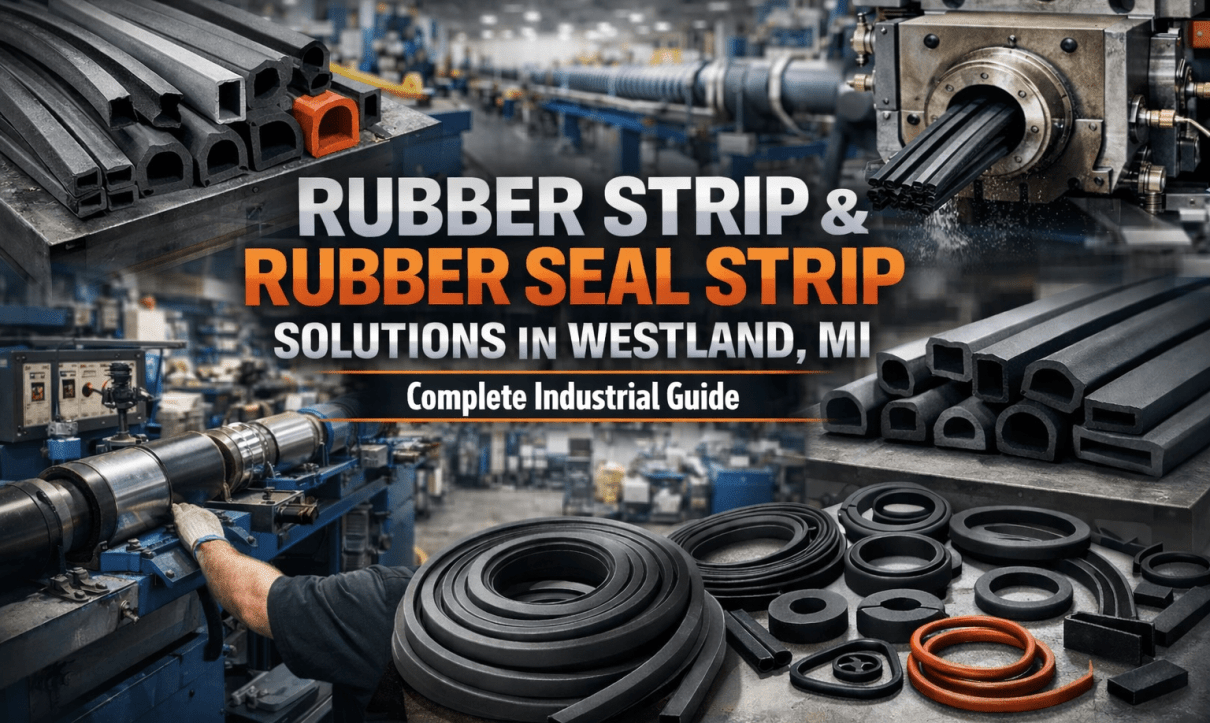
This comprehensive on-page guide explains everything you need to know about rubber strip, rubber seal strip, and L-shaped rubber seal profiles. It covers materials, manufacturing methods, applications, performance characteristics, customization options, and best practices to help you select the right solution for long-term results.
What Is a Rubber Strip?
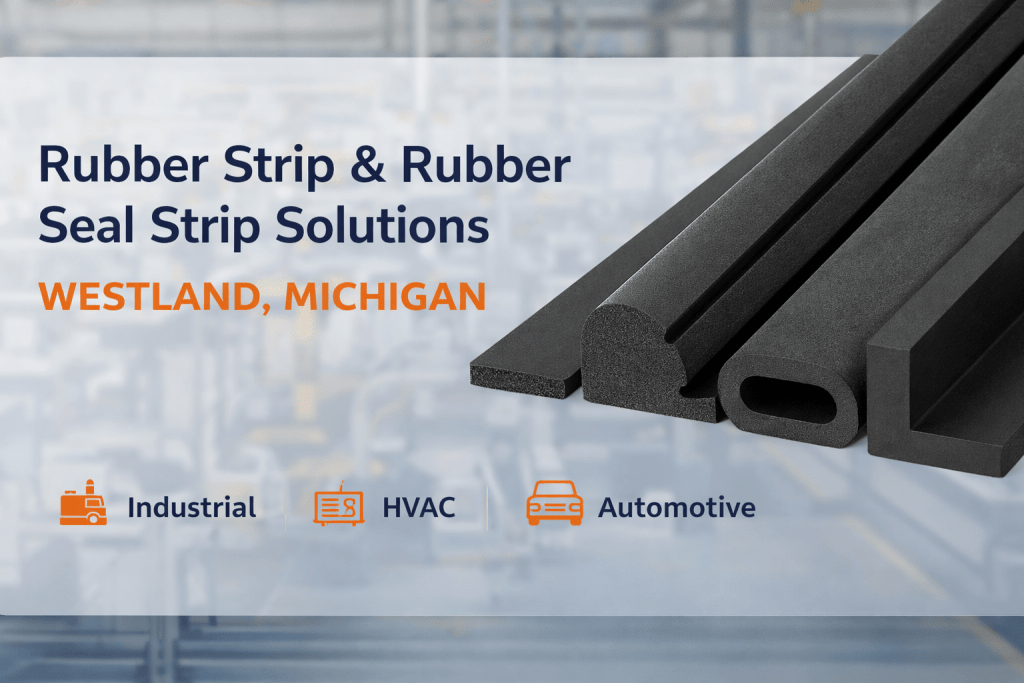
A rubber strip is a flexible, extruded rubber component designed for sealing, insulation, spacing, or surface protection. Manufacturers typically produce rubber strips in straight lengths and a wide range of cross-section profiles, including flat, square, round, and L-shaped designs.
Because rubber naturally resists compression, vibration, and environmental exposure, rubber strips perform exceptionally well in both indoor and outdoor environments. As a result, they are commonly used to close gaps, protect sharp edges, absorb shock, and prevent leakage in industrial and commercial settings.
In many applications, rubber strips also enhance product lifespan by reducing wear caused by friction, moisture, and movement.
Understanding Rubber Seal Strip Applications
While the term “rubber strip” describes a broad category, a rubber seal strip is specifically engineered to create a tight seal between two surfaces. Its primary function is to block unwanted elements such as air, water, dust, chemicals, and noise.
Because sealing performance directly affects efficiency and safety, rubber seal strips are essential in high-use and high-exposure applications.
Common Uses of Rubber Seal Strips
- Door and window sealing
- Industrial machinery enclosures
- Automotive body panels and compartments
- HVAC ductwork and air-handling units
- Electrical cabinets and control panels
- Construction joints and expansion gaps
In industrial regions like Westland, Michigan—where manufacturing, automotive supply chains, and infrastructure development are prominent—rubber seal strips help maintain equipment integrity and operational reliability.
Why L-Shaped Rubber Strips Are in High Demand
Among all rubber profiles, the L-shaped rubber strip stands out for its versatility and efficiency. Often referred to as an L-seal or rubber L-profile, this design seals corners, edges, and right-angle joints where standard flat strips may fall short.

Key Advantages of L-Shaped Rubber Seal Strips
- Provides effective edge and corner sealing
- Prevents air and water infiltration at joints
- Installs easily on panels, frames, and enclosures
- Absorbs vibration and reduces noise
- Protects metal, glass, and plastic edges from damage
Because of these benefits, L-shaped rubber seal profiles are widely used in cabinets, doors, panels, machinery housings, and structural frames.
Materials Used in Rubber Strip Manufacturing
Material selection plays a major role in rubber strip performance. Manufacturers produce rubber strips using different elastomers to suit specific environmental and mechanical requirements.
EPDM Rubber Strip
EPDM remains one of the most commonly used materials for rubber seal strips, especially in outdoor and industrial applications.
Key benefits include:
- Excellent resistance to weather, UV, and ozone
- Stable performance across wide temperature ranges
- Long service life with minimal degradation
- Ideal for automotive, construction, and HVAC use
Neoprene Rubber Strip
Neoprene rubber strips perform well in environments that involve oils, greases, and moderate chemical exposure.
Key benefits include:
- Strong mechanical durability
- Good oil and chemical resistance
- Reliable performance in industrial settings
Silicone Rubber Strip
Silicone rubber strips are preferred for high-temperature, food-grade, and medical applications.
Key benefits include:
- Withstands extreme heat and cold
- Maintains flexibility at low temperatures
- Non-toxic, odorless, and hygienic
- Suitable for sensitive environments
Natural Rubber Strip
Natural rubber works best where flexibility and abrasion resistance are priorities.
Key benefits include:
- High elasticity
- Good tear resistance
- Cost-effective for general-purpose applications
Rubber Strip Manufacturing Process
High-quality rubber strip products are typically manufactured using rubber extrusion. This process ensures uniform shape, precise dimensions, and consistent surface quality.
Rubber Extrusion Process Overview
- Rubber compound preparation
- Material extrusion through a custom die
- Formation of the desired profile shape
- Vulcanization to cure the rubber
- Cutting to specified lengths
Through extrusion, manufacturers can produce custom rubber seal strips that meet tight tolerances required for demanding industrial applications.
Custom Rubber Seal Strip Solutions
Not every sealing requirement fits a standard profile. For this reason, custom rubber strip manufacturing plays an important role in modern industries.
Customization Options Include
- Custom profile designs (L-shape, U-shape, flat, bulb)
- Specific hardness levels (durometer control)
- Color variations
- Adhesive backing options
- Precision cutting, splicing, and joining
- Material selection based on environment
Custom rubber seal strips deliver a precise fit, improved sealing performance, and extended service life, especially in specialized machinery and architectural installations.
Industrial Applications of Rubber Strips in Michigan
Westland and the surrounding Michigan region support diverse industries that depend on reliable rubber sealing solutions.
Automotive Industry
Rubber strips seal doors, trunks, panels, and compartments while reducing vibration and noise.
Manufacturing & Machinery
Rubber seal strips protect equipment from dust, moisture, and vibration, improving safety and uptime.
Construction & Infrastructure
Rubber strips seal windows, expansion joints, and structural connections, enhancing energy efficiency.
HVAC Systems
Rubber seal strips reduce air leakage and improve system efficiency.
Electrical & Electronics
Sealing enclosures prevents moisture and contaminant damage to sensitive components.
Benefits of Using High-Quality Rubber Seal Strips
Investing in premium rubber strip solutions delivers measurable long-term benefits.
Key Advantages Include
- Improved sealing reliability
- Reduced maintenance and repair costs
- Extended equipment lifespan
- Better energy efficiency
- Reduced vibration and noise
- Enhanced protection against corrosion
In demanding industrial environments, inferior sealing materials often lead to costly downtime. High-quality rubber seal strips help prevent these issues.
How to Choose the Right Rubber Strip for Your Project
Selecting the correct rubber strip requires careful evaluation of application conditions.
Important Factors to Consider
- Environmental exposure (indoor or outdoor)
- Operating temperature range
- Chemical or oil contact
- Compression and movement requirements
- Profile shape, including L-shaped rubber seal strips
Partnering with experienced rubber product suppliers helps ensure the right solution for each application.
Rubber Strip Installation Best Practices
Proper installation plays a major role in sealing performance.
Installation Tips
- Clean surfaces thoroughly before installation
- Ensure correct sizing and alignment
- Avoid stretching the sealing strip solution during placement
- Use compatible adhesives when required
- Inspect seals periodically for wear
Correct installation maximizes durability and sealing efficiency.
Sustainability and Rubber Strip Products
Modern rubber manufacturing emphasizes long service life and reduced waste. Durable sealing strip solution require fewer replacements, lowering material consumption over time. Additionally, some rubber materials offer recyclability, supporting environmentally responsible operations.
Advanced Performance Characteristics of Rubber Seal Strips
Performance characteristics determine how well a rubber seal strip performs under long-term stress.
Compression Set Resistance
Low compression set ensures sealing strip solution return to their original shape after compression, maintaining consistent sealing over time.
Tensile Strength & Tear Resistance
High tensile strength prevents tearing during installation, while tear resistance supports durability in high-vibration environments.
Thermal Stability
Materials such as EPDM and silicone maintain flexibility during Michigan’s cold winters and warm summers.
Rubber Strip Tolerances & Dimensional Accuracy
Precision manufacturing ensures:
- Uniform sealing pressure
- Proper fit and installation
- Reduced material waste
- Improved operational efficiency
Tight tolerances are especially important in automotive, HVAC, and electrical enclosure applications.
Rubber Strip vs Other Sealing Materials
Compared to foam, plastic, or metal seals, rubber seal strips offer superior flexibility, durability, and vibration control. For dynamic sealing applications, rubber remains the preferred choice.
Role of Rubber Seal Strips in Energy Efficiency
Proper sealing reduces air leakage, improves insulation, and enhances HVAC performance. As a result, rubber seal strips contribute directly to lower energy costs in industrial and commercial facilities.
Maintenance & Inspection of Rubber Seal Strips
Routine inspection extends service life.
Best practices include:
- Checking for cracks or hardening
- Cleaning debris buildup
- Replacing worn or deformed strips
- Inspecting adhesive-backed seals
Rubber Seal Strips for Safety & Compliance
rubber sealing solution support safety and compliance by:
- Preventing dust ingress
- Containing fumes
- Reducing vibration hazards
- Protecting exposed edges
Weatherproofing Benefits of Rubber Seal Strips
rubber sealing solution protect against rain, wind, dust, and UV exposure. EPDM sealing strip solution perform particularly well in outdoor applications across Michigan’s changing climate.
Long-Term Cost Savings with Quality Rubber Strips
Although low-quality materials may reduce initial costs, they often increase maintenance expenses. High-quality sealing strip solution system reduce replacements and lower total ownership costs.
Frequently Asked Questions (FAQ)
What is the difference between a rubber strip and a rubber seal strip?
A sealing strip solution is a general extruded rubber component, while a rubber seal strip is designed specifically to create airtight and watertight seals.
Where are rubber seal strips commonly used?
They are used in doors, windows, machinery enclosures, HVAC systems, automotive panels, and electrical cabinets.
Why choose an L-shaped rubber strip?
L-shaped rubber strips seal corners and edges effectively, preventing leaks at right-angle joints.
Are rubber strips suitable for outdoor use?
Yes. Materials like EPDM resist UV, ozone, and weather exposure.
Can rubber seal strips be customized?
Yes. They can be customized by shape, size, material, hardness, and length.
How long do rubber seal strips last?
With proper selection and installation, high-quality rubber seal strips can last many years.
Do rubber strips reduce noise and vibration?
Yes. Rubber absorbs vibration and dampens noise effectively.
Final Thoughts
A high-performance rubber strip or rubber sealing solution plays a vital role in efficiency, durability, and safety. For businesses operating in Westland, Michigan, choosing the right rubber sealing solution ensures long-term performance, regulatory compliance, and cost savings.
By understanding materials, applications, and performance factors, you can confidently select the best rubber strip solution for demanding industrial environments.