
 By
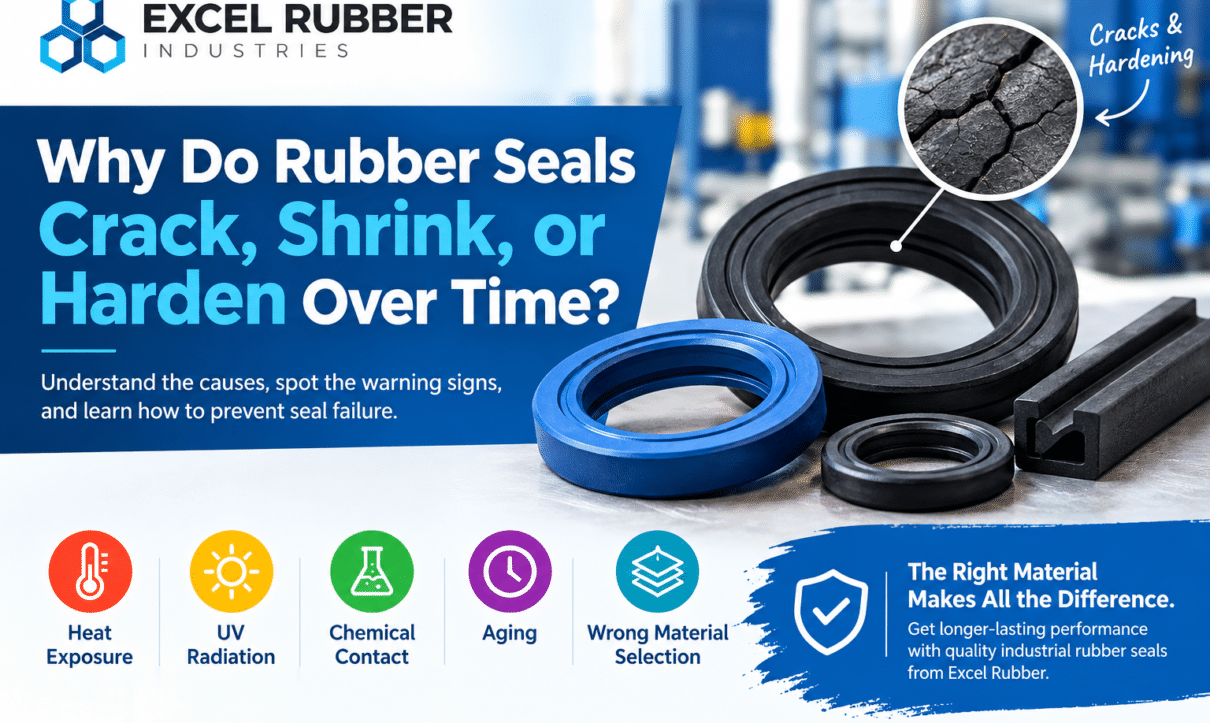
Rubber seals can crack, shrink, or harden because of heat, sunlight, chemical exposure, aging, and improper material selection. These changes reduce flexibility and sealing performance, potentially causing leaks, equipment damage, and unexpected downtime. Choosing the right rubber compound and inspecting seals regularly can help extend service life.
For U.S. manufacturers, OEMs, and maintenance teams, understanding why industrial rubber seals fail is essential for maintaining reliable equipment and controlling maintenance costs.
Table of Contents
- Why Do Rubber Seals Deteriorate?
- Common Signs of Rubber Seal Failure
- How to Prevent Rubber Seal Failure
- Which Rubber Material Should You Choose?
- Expert Tips for Longer-Lasting Rubber Seals
- Common Mistakes to Avoid
- Frequently Asked Questions
Why Do Rubber Seals Crack, Shrink, or Harden?
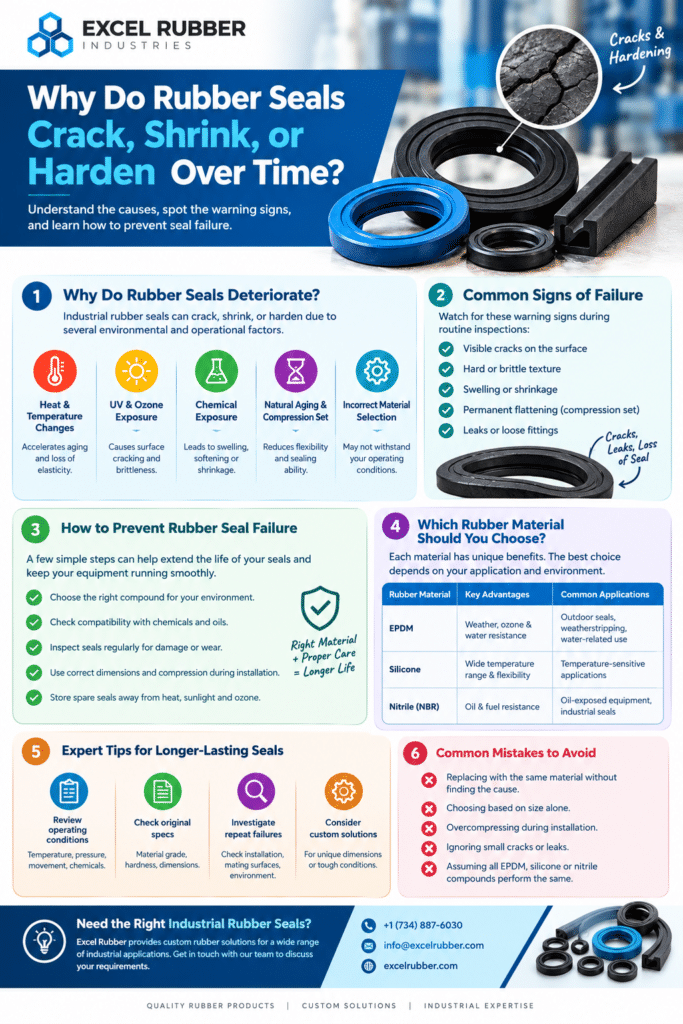
Industrial rubber seals deteriorate when environmental conditions or operating demands exceed the material’s capabilities. Here are five common causes.
1. Excessive Heat and Temperature Changes
Prolonged heat exposure can accelerate rubber aging, causing seals to lose elasticity and develop cracks. Repeated heating and cooling can also contribute to material fatigue.
Example: A rubber gasket installed near a hot industrial motor may harden faster than one operating in a temperature-controlled environment.
2. UV Radiation and Ozone Exposure
Outdoor equipment exposes rubber components to sunlight, weather, and ozone. Certain rubber compounds are more vulnerable to surface cracking under these conditions.
3. Chemical Exposure
Oils, fuels, cleaning agents, and industrial chemicals can cause swelling, softening, shrinkage, or cracking when the rubber is not compatible with the substance.
4. Natural Aging and Compression Set
Over time, rubber can lose its elasticity. Seals kept under continuous compression may also fail to recover their original shape, leaving gaps that allow air or fluids to escape.
5. Incorrect Material Selection
A seal designed for outdoor weather resistance may not be suitable for prolonged oil exposure. Selecting a material based only on price or appearance can lead to premature failure.
Common Signs of Rubber Seal Failure
Look for these warning signs during routine equipment inspections:
- Visible cracks: Surface damage caused by aging or environmental exposure.
- Hard or brittle texture: Reduced flexibility that can compromise sealing.
- Swelling or shrinkage: Possible chemical incompatibility or material deterioration.
- Permanent flattening: Compression set that prevents effective sealing.
- Leaks or loose fittings: Evidence that the seal may no longer fit or function correctly.
Replace damaged seals when necessary rather than relying on temporary adjustments.
How to Prevent Rubber Seal Failure
Follow these practical steps to improve the service life of industrial rubber seals:
- Match the rubber compound to the operating temperature and environment.
- Check compatibility with oils, fuels, chemicals, and cleaning products.
- Inspect seals periodically for cracking, deformation, and leaks.
- Use the correct dimensions and compression during installation.
- Store replacement seals away from excessive heat, sunlight, ozone sources, and incompatible chemicals.
For example, an outdoor enclosure may benefit from a weather-resistant EPDM seal, while an oil-exposed assembly may require a different compound based on the specific fluid and operating conditions.
Which Rubber Material Should You Choose?
The right rubber material depends on the operating environment, temperature range, and exposure to chemicals or weather.
| Rubber Material | Common Advantages | Typical Applications |
|---|---|---|
| EPDM | Excellent weather, ozone, and water resistance | Outdoor seals, weatherstripping, and water-related applications |
| Silicone | Broad temperature capability and flexibility | Temperature-sensitive sealing applications |
| Nitrile (NBR) | Good resistance to many petroleum-based oils and fuels | Oil-exposed equipment and industrial seals |
Material performance depends on the specific compound, temperature, chemical concentration, and exposure duration. Always verify compatibility before selecting a replacement.
Expert Tips for Longer-Lasting Rubber Seals
- Review operating conditions first: Record temperature ranges, pressure, movement, and chemical exposure.
- Check the original specification: Confirm material grade, hardness, dimensions, and compression requirements.
- Investigate repeated failures: If a replacement seal fails quickly, examine the installation, mating surfaces, and operating environment.
- Consider custom manufacturing: Nonstandard dimensions or demanding operating conditions may require custom rubber seals designed for the application.
Excel Rubber provides rubber manufacturing solutions for industrial applications. Explore available products and discuss your requirements at Excel Rubber.
Common Mistakes to Avoid
- Replacing a failed seal with the same material without identifying the original failure cause.
- Choosing a seal based on dimensions alone while ignoring chemical and temperature compatibility.
- Overcompressing a gasket during installation.
- Ignoring small cracks or repeated leakage.
- Assuming every EPDM, silicone, or nitrile compound performs identically.
Frequently Asked Questions
Why do rubber seals become hard over time?
Heat, oxidation, ozone, and natural aging can change rubber’s properties, reducing flexibility and increasing the risk of cracking.
Can cracked rubber seals be repaired?
Repair is rarely a dependable long-term solution for a seal that must maintain pressure or prevent leakage. Replacement is generally the safer option.
Which rubber is best for outdoor sealing?
EPDM is often a strong choice because of its weather, ozone, and water resistance. The final selection depends on the application and exposure conditions.
How can I prevent rubber seals from shrinking?
Choose a compatible compound, avoid unsuitable chemicals and excessive temperatures, and verify the seal’s dimensions and operating conditions.
When should I replace an industrial rubber seal?
Replace it when you notice cracks, hardening, permanent deformation, loss of fit, or leakage that indicates compromised sealing performance.
Where can I find custom industrial rubber seals?
Excel Rubber offers industrial rubber product solutions. Visit Excel Rubber to explore its offerings and contact the team about your application requirements.
Conclusion
Rubber seals often crack, shrink, or harden because of environmental exposure, chemical incompatibility, aging, or incorrect installation. Identifying the root cause and selecting a suitable rubber compound can help reduce leakage, prevent repeat failures, and improve equipment reliability.
Need the Right Industrial Rubber Seals?
Excel Rubber can help you explore rubber product solutions for your industrial requirements. Visit Excel Rubber to discuss your application, material needs, and custom sealing requirements.