 By
Industrial rubber parts play a critical role in automotive systems, manufacturing equipment, machinery, and sealing applications. However, when a rubber seal cracks, a gasket leaks, or a molded component wears out too soon, it can lead to equipment downtime, unexpected maintenance costs, and production delays.
For manufacturers in Warren, MI, identifying the cause of rubber part failure is the first step toward finding a reliable, long-term solution. The right material, component design, and manufacturing process can make a significant difference.
Working with an experienced rubber manufacturer in Warren, MI can help businesses identify suitable rubber materials and source components designed for their operating conditions.
1. Common Causes of Industrial Rubber Part Failure
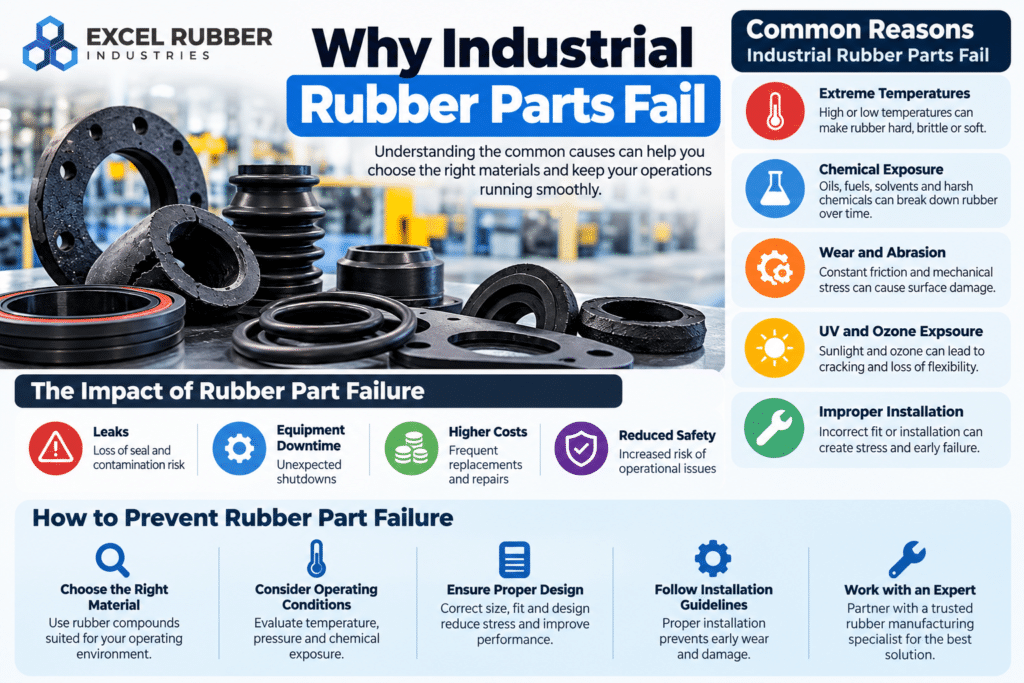
Industrial rubber parts rarely fail without a reason. Understanding the symptoms can help maintenance teams and purchasing managers make better decisions.
Heat and Environmental Exposure
Excessive heat, UV exposure, ozone, and changing temperatures can cause rubber to harden, crack, or lose flexibility. For example, an automotive rubber component exposed to repeated engine heat may deteriorate faster if its material isn’t suitable for that environment.
Solution: Evaluate the operating temperature and environmental exposure before selecting a rubber compound.
Chemical Incompatibility
Oils, fuels, cleaning agents, and industrial chemicals can cause certain rubber compounds to swell, soften, or lose strength.
Solution: Identify the exact chemicals the component will contact and confirm material compatibility with the rubber supplier.
Incorrect Material Selection
Not every rubber material performs well in every application. A compound suitable for outdoor sealing might not be the best choice for continuous oil exposure.
Solution: Consider temperature, chemical resistance, compression, flexibility, and expected service life during rubber material selection.
Poor Fit or Excessive Mechanical Stress
Incorrect dimensions, excessive compression, repeated movement, and poor installation can cause premature wear or leakage.
Solution: Review component drawings, tolerances, compression requirements, and installation conditions before ordering replacement parts.
2. How to Choose the Right Rubber Material
Choosing the right compound helps industrial rubber parts perform reliably under real operating conditions.
| Rubber Material | Common Strengths | Typical Applications |
|---|---|---|
| EPDM | Weather, ozone, and water resistance | Outdoor seals, weatherstripping, and water-related applications |
| Nitrile (NBR) | Resistance to many oils and fuels | Oil seals, gaskets, and selected automotive components |
| Silicone | Broad temperature capability and flexibility | Temperature-sensitive seals and specialized components |
| Natural Rubber | Elasticity and abrasion resistance | Selected vibration-control and mechanical applications |
Material performance depends on the specific compound and operating conditions. Always verify compatibility before finalizing a material.
A knowledgeable custom rubber parts manufacturer can help evaluate whether molded rubber parts, extruded rubber profiles, or another manufacturing approach best fits your application.
3. Practical Ways to Prevent Rubber Component Failure
Manufacturers can reduce avoidable failures by following a few practical steps:
- Inspect failed parts: Look for cracking, swelling, hardening, deformation, or uneven wear.
- Document operating conditions: Record temperature, chemical exposure, pressure, and movement.
- Check dimensions: Confirm that replacement parts meet the required drawings and tolerances.
- Choose the right process: Rubber molding suits many custom-shaped components, while rubber extrusion is commonly used for continuous profiles and tubing.
- Review service life: Track recurring failures to identify patterns and improve material or design choices.
Real-World Example: A Repeatedly Leaking Gasket
If a gasket repeatedly leaks despite proper installation, replacing it with the same material may not solve the problem. Reviewing compression, chemical compatibility, and operating temperature can help identify the actual cause.
4. Why Choose Excel Rubber?
Businesses searching for a rubber products supplier in Warren, MI need components that meet application requirements, not just parts that fit.
Excel Rubber supports industrial rubber product needs through capabilities that include molded rubber components, extruded products, and custom rubber solutions. These product categories can serve a range of industrial and automotive applications.
For OEMs, automotive businesses, and machinery manufacturers, discussing the application, operating environment, dimensions, and performance requirements helps establish a more suitable component specification.
Explore Excel Rubber’s Warren, MI manufacturer page to learn more about its rubber manufacturing offerings.
Frequently Asked Questions
Why do industrial rubber parts fail prematurely?
Common causes include excessive heat, chemical exposure, incorrect material selection, mechanical stress, and improper installation. Identifying the operating conditions helps determine the right corrective action.
Which rubber material is best for industrial applications?
It depends on the application. EPDM often suits outdoor and weather-exposed applications, NBR is commonly considered for oil exposure, and silicone may suit applications requiring broad temperature capability.
Should I choose molded or extruded rubber parts?
Molded rubber parts are useful for many custom shapes and complex geometries. Extruded rubber products are generally suited to continuous profiles, tubing, and seals. The component design determines the appropriate process.
How can Warren, MI manufacturers find a suitable rubber supplier?
Look for a supplier that can review application requirements, material compatibility, component dimensions, and manufacturing needs. Share drawings or samples when available to support a more accurate assessment.
Conclusion
Industrial rubber part failure can increase maintenance costs and disrupt production, but the right troubleshooting approach can help prevent recurring problems. Understanding the failure mechanism, selecting a compatible material, and choosing the appropriate manufacturing process are essential steps.
For businesses seeking a rubber manufacturer in Warren, MI, Excel Rubber is a relevant starting point for exploring molded, extruded, and custom rubber product solutions.
Need Help Finding the Right Rubber Component?
Contact Excel Rubber to discuss your application, drawings, operating conditions, and product specifications.