 By
Have you ever noticed unusual suspension noise, excessive vibration, or a rough ride while driving? Worn automotive rubber bushings could be one reason. These small but essential components play a significant role in vehicle stability, ride comfort, and suspension performance.
Automotive rubber bushings act as flexible cushions between connected metal components. They absorb road shocks, reduce vibrations, and minimize unwanted friction. However, choosing the wrong material or poorly manufactured bushing can lead to premature wear, increased maintenance, and inconsistent vehicle performance.
For automotive OEMs, repair professionals, and parts distributors across the USA, understanding bushing materials, applications, and manufacturing quality is essential when selecting a reliable automotive bushing supplier.
Table of Contents
- What Are Automotive Rubber Bushings?
- Common Signs of Worn Rubber Bushings
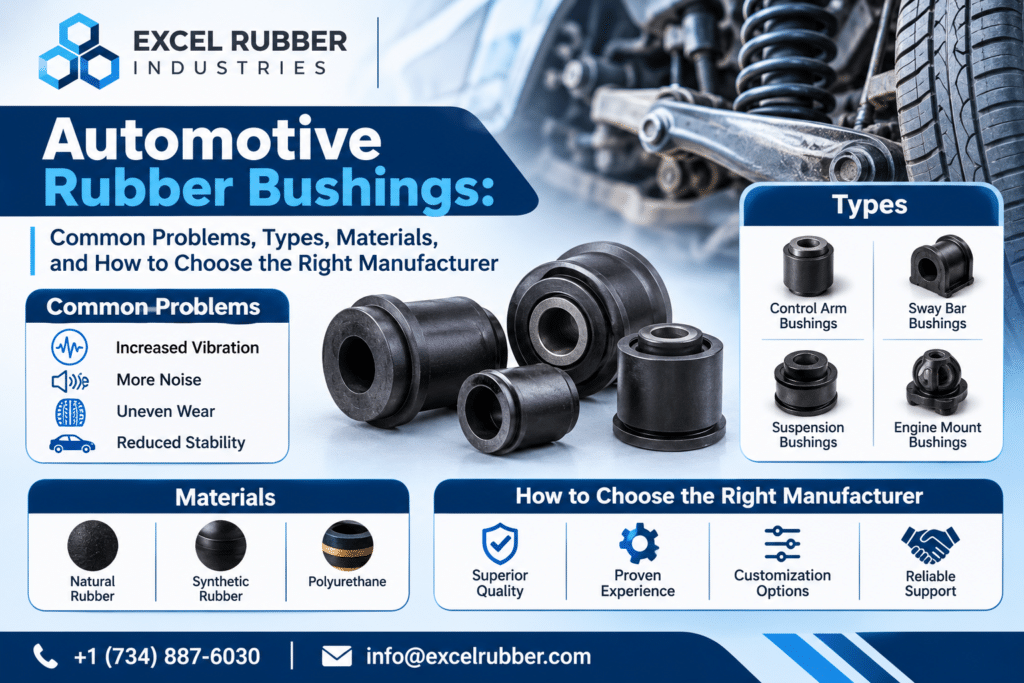
- Types of Automotive Rubber Bushings
- Choosing the Right Rubber Material
- How to Select a Reliable Bushing Manufacturer
- Expert Tips and Common Mistakes
- Frequently Asked Questions
What Are Automotive Rubber Bushings?
Automotive rubber bushings are flexible components installed between vehicle parts to control movement, absorb mechanical shocks, and reduce noise and vibration.
They’re commonly found in:
- Suspension control arms
- Engine and transmission mounts
- Stabilizer bars
- Shock absorber mounting points
- Steering linkages
- Leaf spring assemblies
For example, when a vehicle travels over a pothole, suspension bushings help absorb impact and prevent excessive vibration from transferring directly into the vehicle’s frame.
A properly designed bushing also supports component alignment and improves overall driving comfort.
Common Signs of Worn Automotive Rubber Bushings
Rubber bushings gradually deteriorate because of continuous movement, road exposure, temperature changes, and mechanical stress.
Watch for these warning signs:
- Clunking noises: Worn suspension bushings may produce knocking sounds when driving over bumps.
- Excessive vibration: Damaged engine mount bushings can allow unwanted vibration to reach the cabin.
- Uneven tire wear: Deteriorated control arm bushings may affect wheel alignment.
- Loose steering response: Worn steering components can create unwanted movement.
- Visible rubber cracks: Aging, environmental exposure, and repeated stress can cause rubber deterioration.
Practical tip: During vehicle inspections, check for torn rubber, excessive movement, separation from metal sleeves, and signs of permanent deformation. Not every surface crack means immediate failure; evaluate the component’s actual condition.
Types of Automotive Rubber Bushings
Different vehicle systems require different bushing designs depending on load, movement, and operating conditions.
| Bushing Type | Primary Application |
|---|---|
| Control arm bushings | Suspension movement and vibration control |
| Engine mount bushings | Engine vibration isolation |
| Stabilizer bar bushings | Suspension stability |
| Leaf spring bushings | Load-bearing suspension connections |
| Shock absorber bushings | Impact absorption |
| Transmission mount bushings | Drivetrain vibration reduction |
Selecting the correct design helps maintain reliable performance under different driving conditions.
Choosing the Right Rubber Material
Material selection directly influences bushing durability, flexibility, and resistance to environmental conditions.
| Rubber Material | Key Properties | Suitable Applications |
|---|---|---|
| Natural Rubber | High elasticity and resilience | Suspension bushings |
| EPDM | Excellent weather and ozone resistance | Outdoor automotive components |
| Nitrile (NBR) | Oil and fuel resistance | Oil-exposed applications |
| Neoprene | Weather and moderate oil resistance | Automotive and industrial applications |
| Silicone | Broad temperature resistance | Specialized high-temperature applications |
The best material depends on operating temperature, chemical exposure, load requirements, and expected service life.
For instance, a bushing exposed to engine oil may require an oil-resistant NBR compound rather than standard EPDM.
How to Select a Reliable Automotive Bushing Manufacturer
Finding the right automotive bushing manufacturer involves more than comparing prices. Consistent quality and application-specific engineering matter.
Before choosing a supplier, evaluate these factors:
- Material expertise: Check whether the manufacturer works with suitable rubber compounds for automotive environments.
- Customization capabilities: Look for manufacturers offering custom dimensions, hardness levels, and molded designs.
- Manufacturing precision: Dimensional accuracy helps ensure proper fitting and consistent performance.
- Quality control: Ask about material testing, dimensional inspection, and production consistency.
- OEM requirements: Confirm whether the supplier can manufacture components according to your drawings, samples, and specifications.
For automotive OEMs and commercial vehicle manufacturers, working with an experienced commercial vehicle bushing supplier can help maintain consistent component quality across production requirements.
Explore Excel Rubber’s automotive rubber bushes for customized rubber bushing solutions.
Expert Tips and Common Mistakes
Expert Tips
- Specify the required Shore A hardness before requesting a quotation.
- Share technical drawings with dimensional tolerances.
- Consider temperature, oil exposure, ozone, and mechanical loading.
- Evaluate rubber-to-metal bonding requirements where applicable.
- Request samples before approving large production orders.
Common Mistakes to Avoid
- Choosing rubber compounds based on price alone.
- Ignoring the operating environment.
- Overlooking dimensional tolerances.
- Assuming every vehicle requires the same bushing hardness.
- Selecting a supplier without evaluating manufacturing capabilities.
These considerations help reduce premature failures and unnecessary replacement costs.
Frequently Asked Questions
What are automotive rubber bushings used for?
Automotive rubber bushings absorb shocks, isolate vibrations, reduce noise, and allow controlled movement between connected vehicle components.
How long do automotive rubber bushings last?
Their lifespan varies depending on rubber material, vehicle usage, road conditions, temperature, and maintenance. Regular inspections help identify deterioration early.
Which rubber is best for automotive bushings?
Natural rubber, EPDM, NBR, and neoprene are common options. The ideal compound depends on load, flexibility, temperature, and chemical exposure.
Can automotive rubber bushings be custom manufactured?
Yes. A specialized bushings manufacturer can produce custom components based on technical drawings, samples, dimensions, hardness, and application requirements.
How do I find a reliable automotive bushing supplier in the USA?
Evaluate material expertise, customization capabilities, manufacturing consistency, quality control, and the supplier’s ability to meet your technical specifications.
Conclusion
Automotive rubber bushings may be small components, but their impact on suspension performance, vibration control, and vehicle reliability is significant. Choosing the right design, rubber compound, and manufacturing partner helps improve durability and reduce maintenance concerns.
For automotive OEMs, distributors, and commercial vehicle manufacturers, partnering with an experienced manufacturer is an important step toward achieving consistent product quality.
Looking for a Reliable Automotive Rubber Bushing Manufacturer?
Excel Rubber Industries Inc. offers customized rubber bushing solutions for automotive and industrial applications. Whether you need application-specific rubber bushes or custom-molded components, choosing the right manufacturing partner starts with understanding your requirements.
Contact Excel Rubber Industries Inc.
- Website: https://excelrubber.com/
- Phone: +1 (734) 887-6030
- Email: info@excelrubber.com
Explore Products: Automotive Rubber Bushings – Excel Rubber