 By
Cold weather can create serious challenges for industrial rubber components. When temperatures drop during Wisconsin winters, rubber seals may become stiff, lose flexibility, develop cracks, or struggle to maintain a proper seal. For manufacturers operating machinery, vehicles, and outdoor equipment, even a small sealing failure can lead to leaks, equipment downtime, and costly maintenance.
But why do industrial rubber seals fail in cold weather, and how can businesses prevent these problems?
The answer often comes down to rubber material selection, temperature resistance, compression performance, and installation quality. Choosing the right material can help extend component life and maintain reliable sealing performance.
1. Why Do Rubber Seals Fail in Cold Weather?
Industrial rubber seals can lose flexibility when exposed to temperatures below their recommended operating range. As rubber becomes stiffer, it may not conform properly to mating surfaces, increasing the risk of leakage.
For example, an outdoor industrial enclosure in Milwaukee may experience repeated temperature changes throughout winter. If its rubber gasket isn’t designed for those conditions, it may lose its ability to maintain consistent contact.
Common warning signs include:
- Visible cracks or surface damage.
- Hardening or reduced flexibility.
- Air or fluid leakage.
- Loss of compression and sealing pressure.
- Premature wear around sealing edges.
2. Common Causes of Cold-Weather Rubber Seal Failure
Understanding the cause helps manufacturers choose a more effective solution.
A. Incorrect Rubber Material Selection
Not every rubber compound performs equally in freezing conditions. A material designed primarily for oil resistance may not offer the low-temperature flexibility required for an outdoor application.
B. Loss of Elasticity
Some rubber compounds become increasingly rigid as temperatures fall. This reduces their ability to recover after compression and maintain consistent sealing contact.
C. Compression Set
When a rubber gasket remains compressed for extended periods, it may not return to its original shape. This condition, known as compression set, can create gaps and lead to leakage.
D. Improper Installation
Incorrect dimensions, excessive compression, poor surface preparation, or unsuitable fitting methods can accelerate seal damage, particularly during seasonal temperature changes.
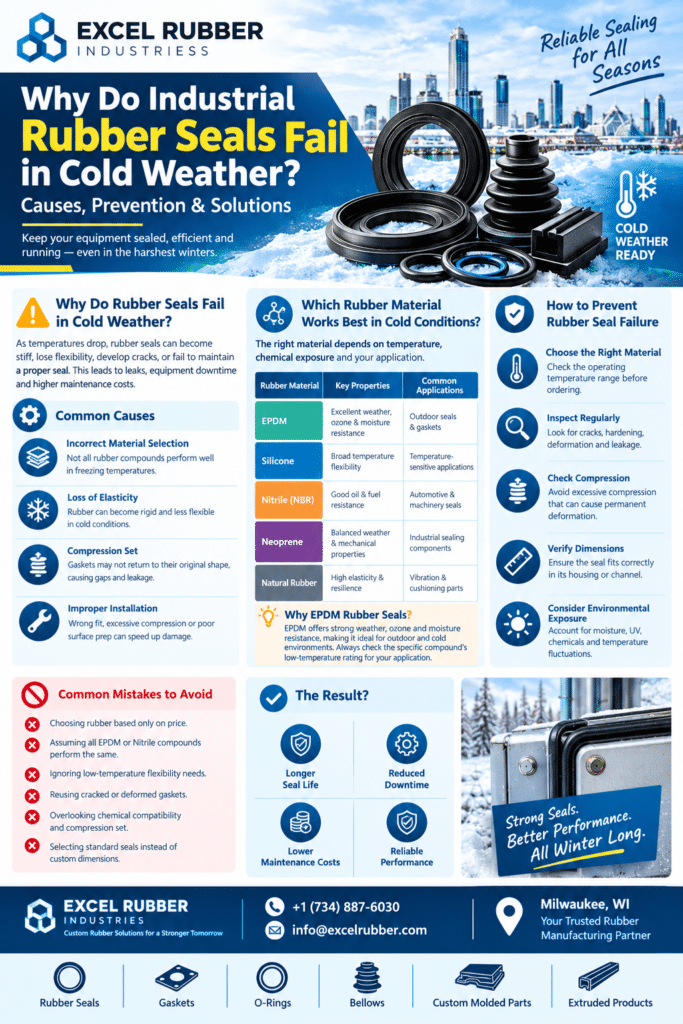
3. Which Rubber Material Works Best in Cold Conditions?
Selecting the right material depends on operating temperature, chemical exposure, weather conditions, and mechanical requirements.
| Rubber Material | Key Properties | Common Applications |
|---|---|---|
| EPDM | Excellent weather, ozone, and moisture resistance | Outdoor seals and gaskets |
| Silicone | Broad temperature flexibility | Temperature-sensitive applications |
| Nitrile (NBR) | Good oil and fuel resistance | Automotive and machinery seals |
| Neoprene | Balanced weather and mechanical properties | Industrial sealing components |
| Natural Rubber | High elasticity and resilience | Vibration and cushioning parts |
Why Consider EPDM Rubber Seals?
EPDM is widely used in outdoor applications because of its resistance to weathering, ozone, and moisture. However, the actual low-temperature performance depends on the specific compound formulation.
Silicone may be preferable for applications requiring a wider temperature range, while Nitrile is often selected when oil resistance is a priority.
The best choice should always be based on the application’s complete operating requirements.
4. How to Prevent Rubber Seal Failure in Cold Weather
Manufacturers can reduce premature seal failures with a few practical steps:
- Choose temperature-appropriate materials: Check the compound’s recommended operating temperature range before ordering.
- Inspect seals regularly: Look for cracks, hardening, deformation, and leakage.
- Check compression requirements: Avoid excessive compression that can accelerate permanent deformation.
- Verify dimensions: Ensure the seal fits correctly within its housing or installation channel.
- Consider environmental exposure: Account for moisture, UV radiation, chemicals, and temperature fluctuations.
For Milwaukee manufacturers operating outdoor machinery, transportation equipment, or industrial enclosures, these checks can help reduce unexpected maintenance.
5. Common Mistakes to Avoid
Avoid these mistakes when selecting industrial rubber seals:
- Choosing rubber based only on price.
- Assuming every EPDM or Nitrile compound performs identically.
- Ignoring low-temperature flexibility requirements.
- Reusing cracked or permanently deformed gaskets.
- Overlooking chemical compatibility and compression set.
- Selecting standard seals when custom dimensions are required.
A proper material and design review can prevent unnecessary replacement costs.
6. Frequently Asked Questions
Why do industrial rubber seals become hard in winter?
Low temperatures can reduce molecular flexibility in certain rubber compounds, making seals harder and less elastic. The effect depends on the material formulation and its temperature rating.
Are EPDM rubber seals suitable for cold weather?
Yes. Many EPDM compounds offer good weather resistance and low-temperature flexibility. However, buyers should verify the specific grade’s operating temperature range.
How can I prevent rubber seal cracking?
Select a suitable rubber compound, verify temperature compatibility, avoid excessive compression, and inspect components regularly for early signs of damage.
Which rubber is best for outdoor industrial sealing?
EPDM is a common choice because of its weather, ozone, and moisture resistance. Silicone and other elastomers may be more suitable for different operating conditions.
Where can Milwaukee manufacturers source custom rubber seals?
Manufacturers can work with experienced rubber suppliers such as Excel Rubber Industries for custom extruded, molded, and sponge rubber components based on application requirements.
Conclusion
Cold-weather rubber seal failures don’t have to become a recurring problem. By understanding material limitations, compression behavior, installation requirements, and environmental exposure, manufacturers can select more reliable industrial sealing solutions.
The right rubber compound can make a significant difference in equipment performance, maintenance costs, and long-term durability.
Need Custom Industrial Rubber Seals?
Excel Rubber Industries provides custom rubber manufacturing solutions for automotive, industrial, OEM, and machinery applications. Our capabilities include rubber extrusion, molded components, EPDM sponge products, and fabricated rubber parts.
If you’re looking for dependable industrial rubber seals in Milwaukee, WI, our team can help you evaluate material and product requirements for your application.
Contact Excel Rubber Industries:
Phone: +1 (734) 887-6030
Email: info@excelrubber.com