 By
A rubber diaphragm may look like a simple sealing component, but its performance directly affects equipment reliability, pressure control, and leakage prevention. When a diaphragm cracks, stretches, or loses flexibility, pumps, valves, and automotive systems can experience unexpected downtime.
For manufacturers and industrial buyers in Milwaukee, WI, choosing the right rubber diaphragms means considering more than dimensions. Material compatibility, operating pressure, temperature, and reinforcement all influence service life.
Whether you’re sourcing an automotive diaphragm seal or need a custom solution for industrial equipment, understanding these factors helps prevent premature failures and unnecessary maintenance costs.
Table of Contents
- What Are Rubber Diaphragms?
- Common Types and Applications
- How to Select the Right Diaphragm Material
- Rubber Diaphragm Specification Checklist
- Common Selection Mistakes
- Frequently Asked Questions
What Are Rubber Diaphragms?
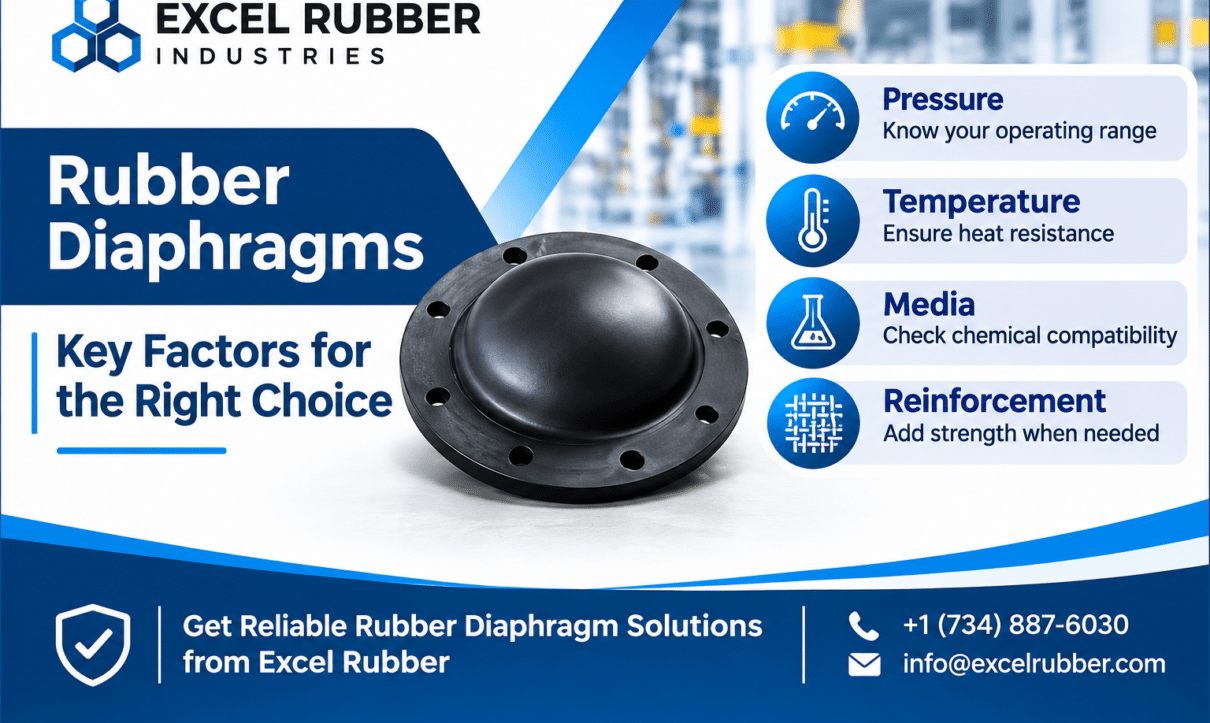
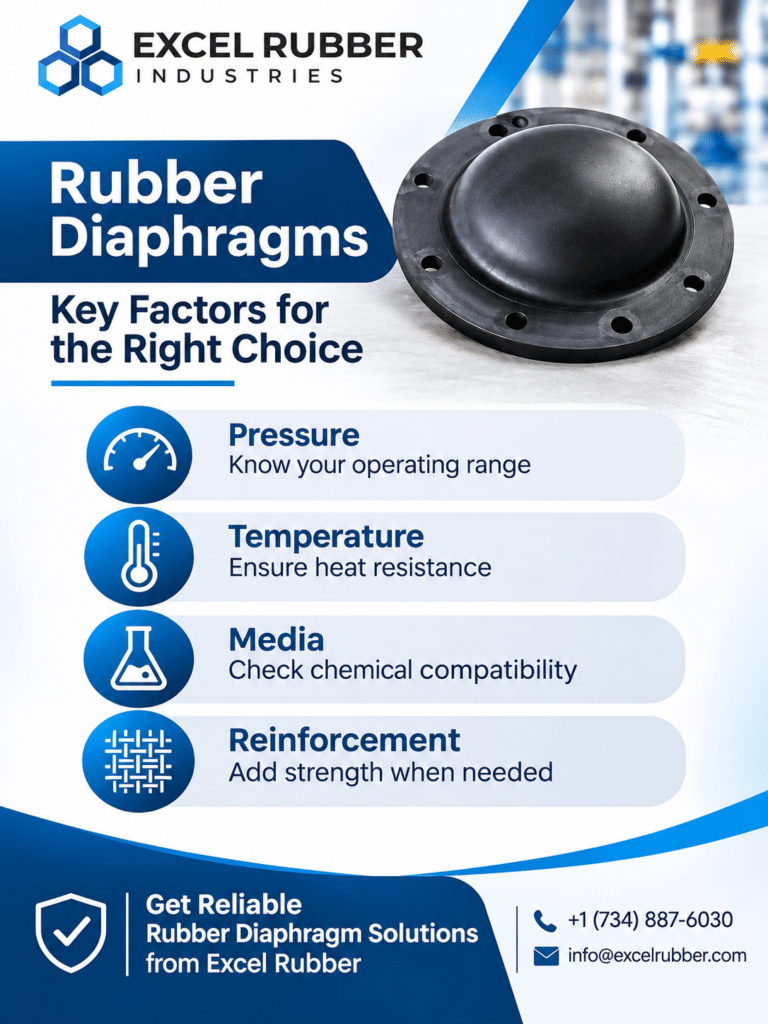
Rubber diaphragms are flexible, molded sealing components that separate two chambers while allowing controlled movement in response to pressure changes. They transfer force, regulate fluid flow, and prevent unwanted leakage without requiring sliding mechanical seals.
They’re commonly used in:
- Automotive fuel and pressure-control systems.
- Industrial pumps and control valves.
- Pneumatic and hydraulic equipment.
- Pressure regulators and actuators.
- Fluid-handling and processing machinery.
For example, an industrial pump operating continuously needs a diaphragm that can flex repeatedly without tearing, swelling, or losing its sealing ability.
Common Types of Rubber Diaphragms and Their Applications
Different equipment designs require different diaphragm configurations.
| Diaphragm Type | Main Characteristics | Common Applications |
|---|---|---|
| Flat diaphragm | Simple, flexible construction | Regulators and valves |
| Fabric-reinforced diaphragm | Improved strength and dimensional stability | Pumps and industrial equipment |
| Convoluted diaphragm | Supports greater movement through molded folds | Actuators and pumps |
| Rolling diaphragm | Allows controlled movement with reduced sliding friction | Hydraulic and pneumatic systems |
Choosing the right design depends on available installation space, required movement, pressure differential, and operating conditions.
How to Select the Right Rubber Diaphragm Material
Diaphragm material selection is one of the most important steps in preventing premature component failure. A material that works well with water may not perform reliably when exposed to petroleum oils or aggressive chemicals.
Here are commonly used elastomers:
| Rubber Material | Key Properties | Suitable Applications |
|---|---|---|
| EPDM | Weather, ozone, and water resistance | Outdoor and water systems |
| Nitrile (NBR) | Good oil and fuel resistance | Automotive and oil-handling equipment |
| Silicone | Excellent flexibility and temperature resistance | Temperature-sensitive applications |
| Neoprene | Weather and moderate chemical resistance | General industrial applications |
| Natural Rubber | High elasticity and flexibility | Applications requiring repeated flexing |
| FKM | Strong resistance to many oils, fuels, and chemicals | Demanding industrial environments |
Practical tip: If your equipment handles petroleum-based fluids, evaluate NBR or FKM before selecting EPDM. Always confirm compatibility with the exact fluid, additives, concentration, and operating temperature.
For automotive applications, an automotive diaphragm seal must also withstand repeated movement, vibration, and changing environmental conditions.
Rubber Diaphragm Specification Checklist
Before contacting a custom rubber diaphragm manufacturer, prepare the following specifications. This information helps engineers evaluate the right compound and construction.
| Specification | Information to Provide | Why It Matters |
|---|---|---|
| Pressure | Minimum, maximum, and differential pressure | Determines strength requirements |
| Temperature | Continuous and peak operating temperatures | Prevents thermal degradation |
| Media | Water, oil, fuel, chemicals, or air | Determines elastomer compatibility |
| Fabric reinforcement | Nylon, polyester, cotton, or other suitable fabric | Improves strength and dimensional stability |
| Dimensions | Diameter, thickness, and mounting details | Ensures proper fit |
| Movement | Stroke length and operating frequency | Helps determine flex-life requirements |
Expert tip: Don’t specify pressure alone. Pressure fluctuations, operating cycles, and diaphragm movement can influence fatigue life. Fabric reinforcement may improve performance where additional strength and dimensional stability are required.
Common Rubber Diaphragm Selection Mistakes
Even a high-quality diaphragm can fail prematurely when the wrong specifications are used.
Avoid these common mistakes:
- Choosing by price alone: Lower-cost compounds may not withstand actual operating conditions.
- Ignoring chemical compatibility: Certain fluids can cause rubber swelling, softening, or cracking.
- Overlooking temperature changes: Continuous exposure to extreme temperatures can reduce flexibility.
- Using incorrect dimensions: Poor fit can create uneven stress and leakage.
- Ignoring reinforcement requirements: Demanding pressure and repeated movement may require reinforced construction
Frequently Asked Questions
1What are rubber diaphragms used for?
Rubber diaphragms are used to control pressure, separate fluids or gases, prevent leakage, and transfer mechanical force in pumps, valves, regulators, automotive systems, and industrial machinery.
Which rubber material is best for automotive diaphragm seals?
NBR is commonly considered for oil- and fuel-exposed applications, while EPDM and silicone suit different environmental and temperature requirements. The final choice depends on actual operating conditions.
When should I choose a fabric-reinforced rubber diaphragm?
Fabric reinforcement is worth evaluating when the diaphragm experiences higher pressure loads, repeated flexing, or requires improved dimensional stability. Fabric type and construction should match the application.
Can rubber diaphragms be custom manufactured?
Yes. Custom rubber diaphragms can be produced according to application requirements, including material, thickness, diameter, shape, and reinforcement specifications.
How do I find a reliable rubber diaphragm manufacturer for Milwaukee, WI?
Look for a manufacturer that offers material options, custom molding capabilities, application-based recommendations, and consistent quality control. Share your technical drawing and operating specifications before requesting a quotation.
Conclusion
Selecting reliable rubber diaphragms requires balancing material compatibility, pressure resistance, temperature performance, and mechanical flexibility. For Milwaukee, WI, manufacturers and equipment buyers, getting these specifications right can help improve equipment reliability and reduce unexpected maintenance.
Working with an experienced custom rubber diaphragm manufacturer also makes it easier to develop components that match specific industrial and automotive requirements.
Get Custom Rubber Diaphragm Solutions from Excel Rubber
Looking for dependable rubber diaphragm solutions? Excel Rubber Industries Inc. offers custom rubber diaphragm options in multiple elastomer materials for automotive and industrial applications.
Explore our Rubber Diaphragms and discuss your application requirements with our team.
Contact Excel Rubber:
- Phone: +1 (734) 887-6030
- Email: info@excelrubber.com